

Clash of Titans – The War Cry: Oracle and Salesforce
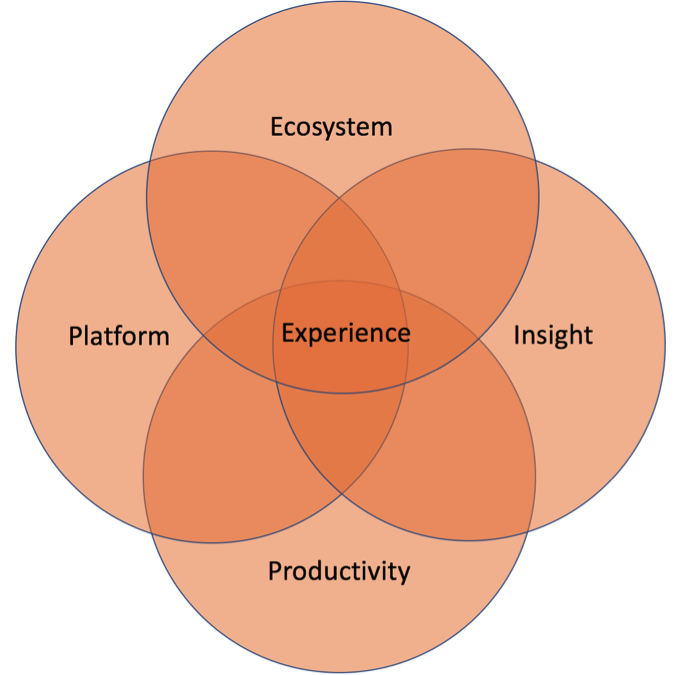
More Food for Thought In the last article Clash of Titans – Microsoft and SAP weigh in of this little series, I discussed the strategy of two of the big four and how they are positioned in the platform play of the business software titans – and others. This article covers the other two: Oracle and Salesforce. These business software vendors are competing in a market that is changing – commoditizing – at a fast rate towards an experience market, and probably beyond, if I follow the argumentation and thoughs of CRM godfather and friend Paul Greenberg. Business application vendors can stay really successful only if they morph into platform players. And this platform is more than just a technology platform, but encompasses four dimensions. The four dimensions that are paramount to be able to deliver great engagements that result in lasting positive experiences are Platform (IaaS/PaaS) Ecosystem Insight Productivity In this article I look at Oracle and Salesforce and how they position themselves in this game of thrones. But now, without further ado, let’s dig into the topic. Oracle Since the launch of what originally was project Fusion and now is Oracle CX, the company has done a remarkable pivot from being an on premise company to becoming a cloud company. The company has its strength in being a full stack provider with a full range of business applications. However, its main strenght is owning the gold standard database engine that runs the majority of business workloads worldwide. From its overall technological profile one could position Oracle somewhere between SAP and Microsoft as it with Open Office also...
Clash of Titans: Microsoft and SAP weigh in
A little recap As it has been some time since I published Clash of Titans – Platform Play, the first part of this little series, let me start with a little recap. The business applications market, especially the CRM market, is evolving fast. CRM has morphed from concentrating on transactions to become an enabler of engagements. Engagements in turn result in experiences. And positive experiences are what companies want to achieve. In a digital world this is possible only if companies rely on a foundation, a (technical) platform. Becoming the provider of the dominant technical platform therefore has become the main goal of of the big business software vendors. However, even governing a great technical platform is not enough. Software vendors that want to be successful platform players need to be able to deliver on four areas to succeed: Platform (IaaS/PaaS) Ecosystem Insight Productivity Only if they deliver on all four aspects are ‘platform players’ able to provide their customers with what they need to involve themselves in digital engagements that result in sustainably positive experiences. I will look at how the big four are measuring up in this and the next article of this little series. Microsoft and SAP will be the starters. Then I will look at Oracle and Salesforce. I might conclude with some surprise additions. But let the games begin! Microsoft Microsoft is the (not so, if you look sharply) hidden champion of this game. Actually, I think that Microsoft is the 800 pound gorilla in this game. It is Microsoft’s objective to become the fabric that connects enterprises of all sizes with their stakeholders,...
Salesforce acquires MuleSoft – A Defensive Move
The News On March 20, 2018 Salesforce announced the signature of a definitive agreement to acquire Mulesoft for a whopping 6.5 billion USD – whopping because the 2017 Mulesoft revenues have been at just $296.5 Million, albeit with a $1 billion target for 2021. The press release states that “together, Salesforce and MuleSoft will accelerate customers’ digital transformations, enabling them to unlock data across legacy systems, cloud apps, and devices to make smarter, faster decisions and create highly differentiated, connected, customer experiences.” Mulesoft is recognized by Gartner as a leader in the 2017 Enterprise Integration Platform as a Service Quadrant. The Bigger Picture As I have stated repeatedly before, most recently here, the enterprise software market is engaged in something that can be called a platform war. There are a few big players and some emergent players in the enterprise software market, and then we have a number of companies that come from the infrastructure side of the house. Business applications get commoditized. Therefore the platform becomes crucial in a battle for dominance. And it is not a given that there will be a dominance. Looking at the 4 big software vendors, Microsoft, Oracle, Salesforce, and SAP, they all have different legacies, strengths and weaknesses. They share one weakness, which is that their core business is in a mainly saturated enterprise market. All of them want and need to play their strengths, while mitigating their weaknesses in order to become the dominant player. Looking at Salesforce, one of its key strengths is the brand. Right or wrong, pretty much the first name that comes to mind when thinking CRM...