UX and CRM – How to make them a match
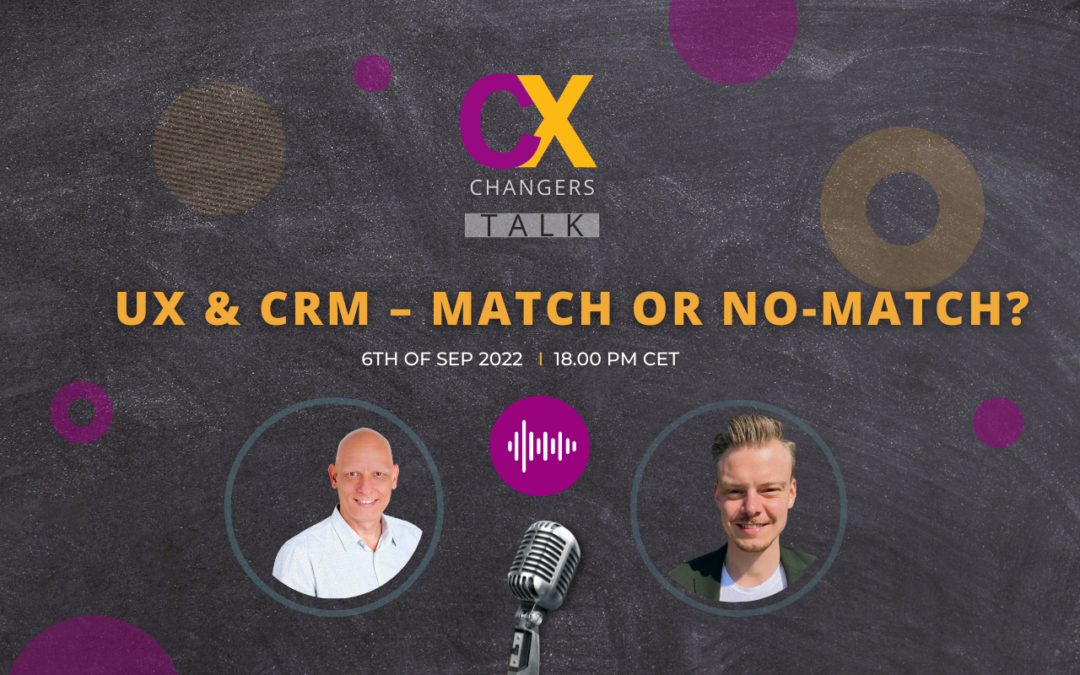
When talking about CRM systems, people – especially managers – mostly think about functions, features, and control. How can a process be supported and managed? How can I get good analytics out of the system? Does it fit into the existing IT landscape? These and many similar questions take precedence when it comes to selecting software systems. Usability and UX are often only an afterthought or, even worse, lip service. The result of this is often an abysmal user adoption of systems, as they do not do what the users want, don’t help them or, on the contrary, cause even more work than the users had before. The CRM Sales and Impact report 2021 study by Arlington Research shows that on average 52 per cent of sales leaders report that their CRM platform is costing them revenue opportunities. This average increases up to 65 percent in specific industries. On the other hand, a study by UsabilityGeek finds that it is beneficial to fuse UX and CX. Similarly, according to research by Jacob Nielsen, when good UX design enhances the customer experience, companies see an average increase of 83 percent of the measured KPIs across marketing, sales, and service. Apart from the revenue boost, benefits include increased and accelerated adoption, higher productivity, improved customer satisfaction, reduced training time and lower support cost. Therefore, the main question to ask is not whether, or rather in how far improving the UX does improve the acceptance, use, and helpfulness of a CRM system. Instead, one needs to ask what it takes to come to a better UX and what the inhibitors are. This blog post is based on...
How (and why) a marine consultancy made Zoho core of their business
During ZohoDay 2022, I had the chance to have a longer conversation with Graham Dallas, business development manager of the ABL Group. Graham was responsible for the implementation of ABL Group’s new CRM system. ABL Group is the result of a 2020 merger of AqualisBraemar ASA and the LOC Group. It is a 400+ person global energy and marine consultancy that helps companies around the world transition toward offshore renewable energy sources, clean shipping, and sustainable marine practices. Formerly Microsoft Dynamics users, ABL Group first began working with Zoho in 2021 via an implementation partner, and they collaborated on a design and build of a customized CRM solution for their business. Soon, the second phase of implementation will begin, which then includes integration with Oracle NetSuite. One of the main challenges facing ABL Group was the integration of two different businesses, one of them already using a “chunky” CRM solution and the other one not having a system. if you do not want to read too much but prefer watching the edited interview, you can do so here. The challenge to address was that ABL Group, also because of the recent merger has a lot of differing business structures that shall be supported via one single system. Luckily, the structures weren’t necessarily complex – the business just has a lot of different requirements due to the different regions and lines of business. ABL Group started with a small team of experienced persons who went into this implementation projects with open eyes and some ideas. They assembled a list of 6 candidates that they narrowed down into three with Zoho...
How to make Zoho a business’s operating system
During ZohoDay 2022, I had the chance to have a longer conversation with Adi Mula, founder and CEO of Foodhub. If you do not want to read too much but prefer watching the edited interview, you can do so here. Similar to GrubHub and DoorDash, Foodhub allows residents of the UK, India, Egypt, Australia, New Zealand, and Malaysia, the US and some more countries to order food to be delivered from a variety of local restaurants; unlike those other sites, Foodhub does not charge service fees. Foodhub currently has about 1,100 employees. Most of them are using Zoho products in one way or another and many use multiple Zoho products. Foodhub started its Zoho journey with the goal of simplifying processes and to be able to provide every team with simple and easy to use tools that will help them do their jobs. Originally, Foodhub worked with a set of interconnected, yet overly complicated applications. This journey started with implementing Zoho CRM because this was where the pain was biggest in this area. The sales teams in the various countries have different needs, yet the business needs them use a common foundation. The old solution did not support this. One of the problems that were caused by this was that Foodhub used huge Excel sheets to support its sales process. Besides the obvious complexity, this also caused a GDPR risk, as these sheets contained lots of personal data that could have easily be shared online. Moving to Zoho CRM immediately solved this problem by enabling model processes that solved the needs of the different regions while implementing an adequate security and permission model. Migrating...