

How to make Zoho a business’s operating system
During ZohoDay 2022, I had the chance to have a longer conversation with Adi Mula, founder and CEO of Foodhub. If you do not want to read too much but prefer watching the edited interview, you can do so here. Similar to GrubHub and DoorDash, Foodhub allows residents of the UK, India, Egypt, Australia, New Zealand, and Malaysia, the US and some more countries to order food to be delivered from a variety of local restaurants; unlike those other sites, Foodhub does not charge service fees. Foodhub currently has about 1,100 employees. Most of them are using Zoho products in one way or another and many use multiple Zoho products. Foodhub started its Zoho journey with the goal of simplifying processes and to be able to provide every team with simple and easy to use tools that will help them do their jobs. Originally, Foodhub worked with a set of interconnected, yet overly complicated applications. This journey started with implementing Zoho CRM because this was where the pain was biggest in this area. The sales teams in the various countries have different needs, yet the business needs them use a common foundation. The old solution did not support this. One of the problems that were caused by this was that Foodhub used huge Excel sheets to support its sales process. Besides the obvious complexity, this also caused a GDPR risk, as these sheets contained lots of personal data that could have easily be shared online. Moving to Zoho CRM immediately solved this problem by enabling model processes that solved the needs of the different regions while implementing an adequate security and permission model. Migrating...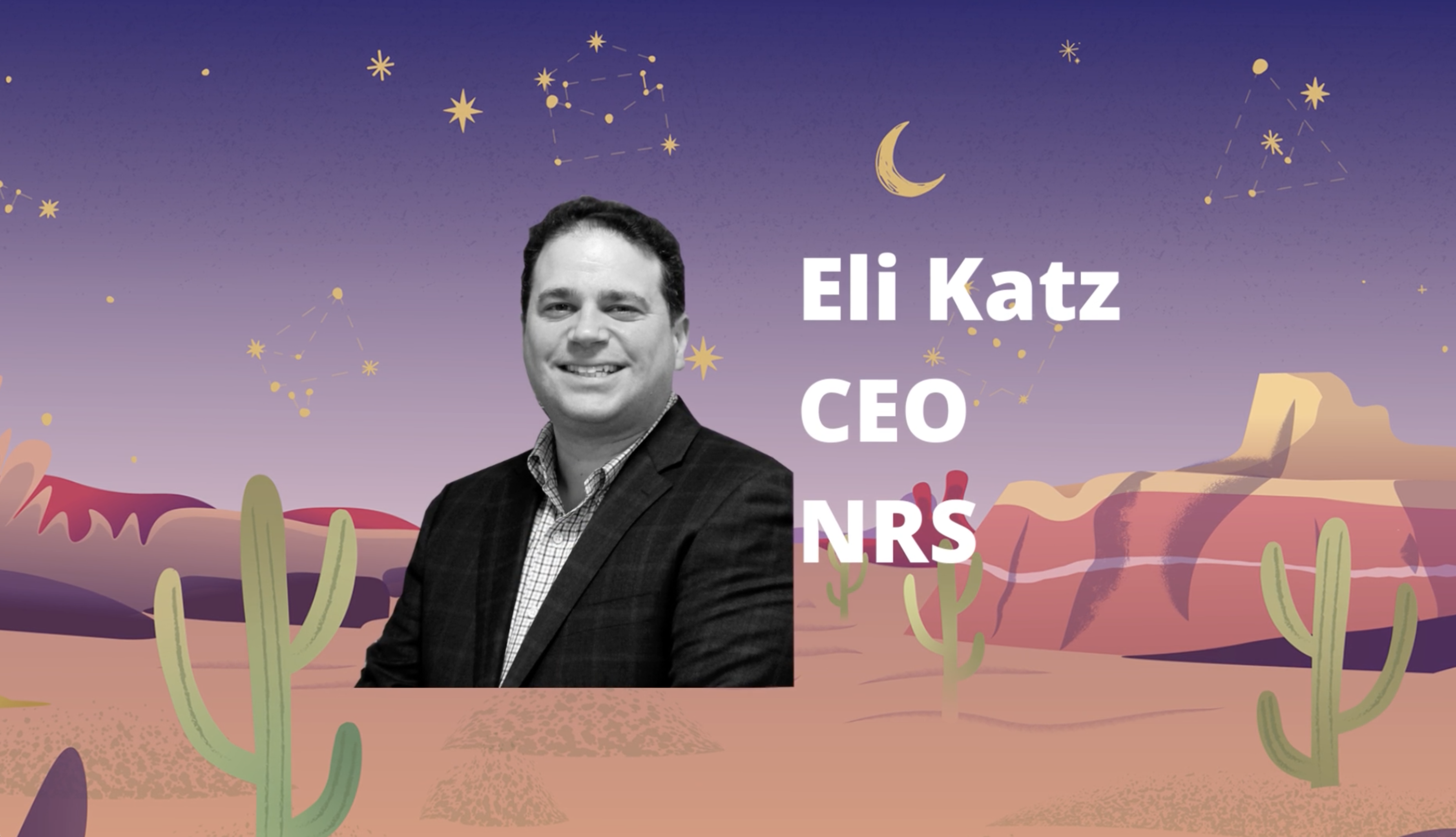
How to “Zoho-matize” a business
During ZohoDay 2022, I had the chance to have a longer conversation with Elie Katz, founder and CEO of National Retail Solutions, NRS. if you do not want to read too much but prefer watching the edited interview, you can do so here. NRS was founded in 2015 and has since then grown its customer base to more than 17,000 retail stores across the United States. NRS is a part of IDT, a provider of communications and payment services to individuals and businesses. The business provides POS and payment processing software, focusing on small, independent retailers, who want to not only survive but also thrive in a big box environment. The NRS POS system is built to help stores organize, attract customers and increase revenue; it includes a loyalty coupon program and other bells and whistles. An important point is the NRS outside-in philosophy, which is defining its own success as a result of making its customers successful by being able to address their needs. The challenge that Elie, his business, as well as the parent company, needed to support requires quite sophisticated own customer service and sales software; there is a widespread salesforce to be supported along with a good number of very different customers with disparate needs and service requests. The team learned early on that it needed a CRM system. This system was originally supposed to be implemented on a well-known platform – that remains unnamed here. The reason being that it was already being implemented at another branch of IDT. This system needed many third party tools and consequently the implementation dragged along at considerable cost, without showing adequate progress...
Don’t mess with Zoho – A Zohoday 2022 recap
After spending two days in Austin, TX, attending the ZohoDay 2022, it is time for a little recap of this interesting event. We were 99 analysts and 24 customers and plenty of knowledgeable Zoho personnel. The incredible Sandra Lo and her team organized the event around open and transparent communication. So, there was plenty of access for us to customers and the Zoho team. Which was very important, as already the keynote session by founder and CEO Sridhar Vembu was quite hardcore. Vembu talked about how strategy and culture need to be one, how culture needs to be the root of strategy, and how Zoho implements this. The Zoho strategy lies on three main pillars Transnational localism, a unique concept that in its essence is about embedding a company into a local community by not only selling into it but also by investing into it. This investment is e.g., by offering high paying jobs in areas where these are scarce, by fostering local education, but also by own local sourcing including local materials and using sustainable practices when building. That way, these communities become self-reliant. Zoho first introduced this concept in 2020. In essence, Zoho sets up shop outside of centers, in rural areas, in a hub and spoke model. Tightly integrated products that together form a powerful platform to run a complete business. This is counterintuitive to the thought of apps using a common platform to deliver their services.Privacy as a core part of all applications and services, born out of the idea that the need for free flow of data needs to be governed by privacy. This is a great...
SAP reports its Q2 2022 – A snap Analysis
The News On July 21, 2022, SAP reported its numbers for the second quarter 2022 and the first half of the business year 2022. In contrast to the last times, I’d like to cover this in written form, as this one is quite interesting and probably takes a bit longer than 5 to 10 minutes. SAP changed the report structure to reflect the common cloud service terminology. It is reporting IaaS, PaaS and SaaS now. The overall cloud revenues increased by 34 percent, with some tailwind by the current weakness of the Euro. The cloud backlog surpassed € 10 bn for the first time, growing at the same pace. S/4HANA Cloud revenue is up by 84 percent, with the backlog even growing at 100 percent. This revenue growth is consistent across the reporting regions. For the first time, SAP broke out PaaS revenues, which came in at € 389 million, up 49 percent yea over year. Not surprisingly, the profitability went down, which is attributable to loss of business due to the war in Ukraine and unfavorable conditions for SAP Ventures. The bigger Picture The enterprise cloud market is extremely contested. It is a saturated market that is dominated by few vendors that are able to support important parts of or even the complete business value chain. The challenge facing all these vendors is the necessity to scale down into the mid and lower mid-market. This, however, is a region that is covered by smaller vendors with similar aspirations, e.g., Creatio, Freshworks, Hubspot, Odoo, Pega, ServiceNow, SugarCRM, Zendesk or Zoho, to name but a few. The big vendors in this Clash...