


Concur and Uber Partnership – Four Winners and one Loser?
Yesterday the controversial ride share/taxi company Uber and the leading travel- and expense management company Concur announced an expansion of their relationship. With their “first-of-its-kind partnership and technology integration” Concur-connected businesses “will gain visibility into [their] Uber usage while increasing traveler productivity and satisfaction”. As part of the deal Uber will exclusively (for the moment, I guess) make its business features available to Concur customers available for free. This includes automated employee onboarding, policy controls, savings performance, and trip summary dashboards only available by the combination of data collected in the systems of the two companies. My Take – a Quadruple Win There are five involved parties. Concur Uber Concur customers Traveling employees It is conceivable that this partnership does good to all of them. On the fifth one – later … Concur wins The exclusivity of this partnership gives concur a nice edge over its competition. The travel management market is pretty contested. As you can see in the G2Crowd Grid for Expense Management Concur is not an uncontested leader. There is some scope left in both directions. Which leads us to the next two possible winners Concur Customers win Companies using Concur win by improved efficiencies, better overview and lower cost for taxi expenses – assuming that Concur doesn’t cream off the benefits – as the announcement states. There are basically five areas in which companies benefit: Companies can expect savings on taxi cost due to Uber instantly becoming a preferred provider A centralized account management connects employees to an account; this gives visibility into rides taken, including pick up, drop off, time of day, and route. Employees can use a central payment account or request reimbursement for...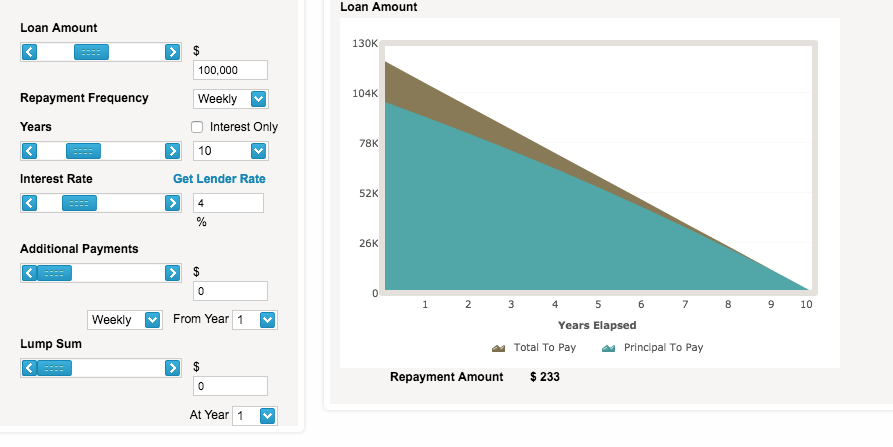
A Bank Tale of Mystery and Imagination
After some investigation into SME CRM Nimble and Freshsales and travel management software traform today is the day of a reflection on customer orientation in one of the industries that managed to become almost indispensable in our lives. Banks. So let me tell you A Bank Tale of Mystery and Imagination But not an invented one. This is life in 2016. Imagine the following extremely uncommon scenario: You want a mortgage for a house. Imagine also that you have a fairly good income, so you want to pay down fast. After all interest rates in NZ are still pretty high compared to other developed nations – although they are very low for NZ standards. And remember – one of the basic premises of neoliberalism is that everybody has equal negotiation powers (the Kiwi in me says “Yeah, right” to that one …). What are the variables you have in a mortgage? The total amount, interest rate, pay down period, term of fixing the interest rate, unless you go floating, that is, and the start of the pay down. So you start doing some maths on what you are able and willing to regularly pay and start negotiating a rate, finally coming to an agreement, clearly communicating that you want a fixed term of one year, and a calculated pay down period of, say 10 years, and weekly payments. You are happy. The documentation arrives, actually three pieces of it. A summary of the agreement Terms and Conditions on about 30 pages of legalese. No need to go through it here; it basically details out that the bank has all...
Fresh wind in the SME CRM Market with Freshsales?
It appears to be demo week for me. After Jon Ferrara gave me a deep dive into the leading social sales application Nimble and I got a dive into the new travel management solution Traform by my old friend Balamurugan Kalia, Sreelesh Pillai introduced me to Freshsales. Freshsales is the new social sales solution by Freshdesk, a company that got founded in the second half of 2010 only and until now focused their efforts on customer service and support. An interesting twist in Sreelesh’s story is that Freshdesk built Freshsales initially to accommodate their own needs and to deal with the demand caused by their growth. Growing at about 50% over the last year or so, the Freshdesk team realized that the applications (yes, plural, including tier 1 solutions) that they used did not really fit their needs. The Freshsales solution covers simple applications for leads, contacts, accounts, deals (opportunities). Leads and contacts can get imported into the system by means of a csv upload. This way it is also possible to migrate Salesforce data into the system. Google contacts or contacts from Office365 are not automatically synced or used. E-Mail and phone conversations that are initiated within Freshsales are tracked against the lead/contact to provide a historic context about what is going on with the person. In case mails are sent directly from an email account one needs to bcc the own Freshsales email address (e.g. sales@aheadcrm.freshsales.io) in order to have the interaction tracked by the system. This then transparently creates a new lead if the recipient e-mail address is not yet known to the system. Using territories and...
Nimble – To CRM or To Not CRM
After a long while I had the pleasure of chatting with Jon Ferrara again for some time, covering things CRM and, of course, Nimble. As you may know Jon is a long time CRM veteran who released his first product named Goldmine back in 1990. Jon is also a very vocal advocate of sales and marketing being first of all “human to human”, something that he claims that most CRM systems are not good at. Consequently, he dubs these systems as “Customer Reporting Systems” as they do not excel at helping salespeople giving a good look at the persons they interact with but are more focused on reporting. Being in the CRM world for a long time myself I cannot really disagree with him about this fact itself; we might have a discussion on what CRM overall is and why it went the (wrong) way it took. Some thoughts on what I think CRM is and how Nimble stands in this, along with some thoughts on how to go ahead with Nimble will come below … Historically CRM systems require a lot of data entry. This is where Nimble is somewhat different, which is something that I like. No CRM can do without manual data entry, but Nimble makes this pretty simple. The system is built around persons and interactions with them and strives to merge calendar, email, social media and contact data base into aggregated views, giving context about involved people. Changes done by the contacts in their external profiles can get pulled into Nimble in a semi-automated way. The goal is to always have the context of...