


How a company matured with a little help of Zoho
Early May, technology vendor Zoho conducted its annual signature event Zoholics in Austin, TX. During this event, Marshall Lager and I had the opportunity to have a conversation with Jason Yoffy, director of engineering at RJG, a training and technology company that on one hand trains plastic injection molders how to make better parts with less waste and on the other hand also provides technology to support better production processes. RJG exists since 1985. It mainly serves companies in the automotive and medical industries that create safety critical and precision parts from plastic with close to 200 employees. We were interested in learning the good, the bad, and the ugly about their journey with Zoho; the needs they had, the experience on the way and, of course, where Yoffy sees scope for improvement. You can watch the complete interview on YouTube. RJG used an “antiquated, server-based”, i.e., an on-premise CRM system that the company wanted to replace as it left much to be desired. The chief concern was “enabling our sales team to sell better.” A lot of processes still were manual, which did not keep pace with the company’s fast growth. Reporting was difficult, of low accuracy, and slow. Lots of relevant data didn’t even make it into the system. Given that, there was lacking transparency in the state of the business; the teams did not get an understanding where everybody was, what the state of initiatives was. Creating a quote for a customer took far too long. While all this is not uncommon, “we wanted to grow up and find a solution that would help us move into the future.” Naturally, one...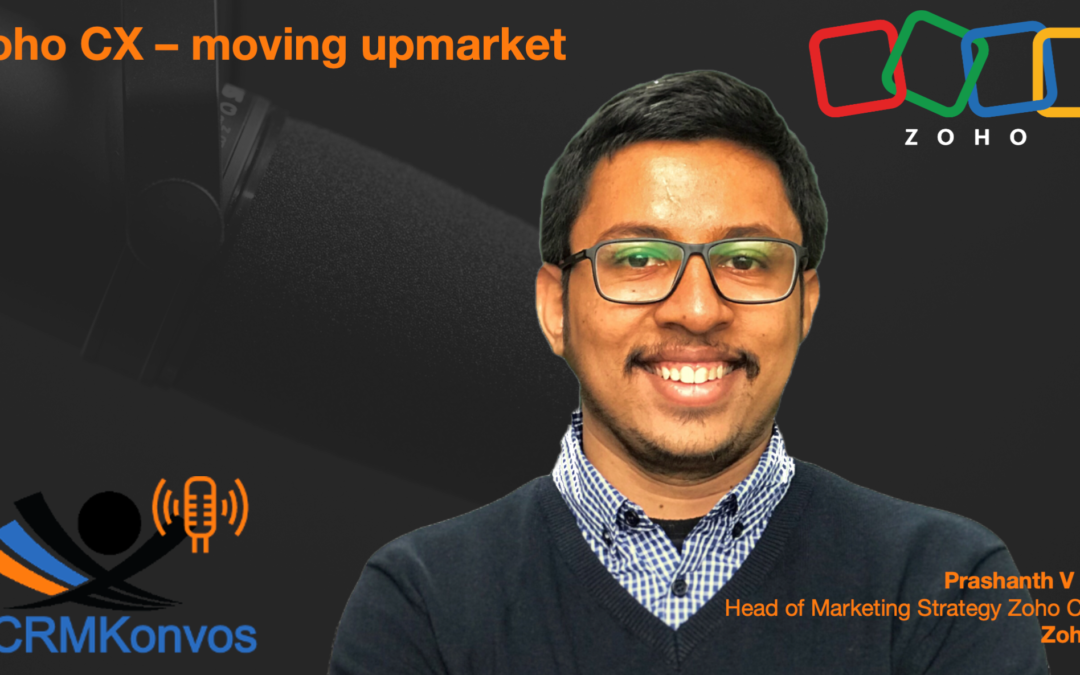
Value, not greed! How a business software vendor translates SMB success into the enterprise
Zoho is well known as a vendor for business applications geared towards SMBs. As many other companies do, Zoho wants to support the upper mid-market and enterprises, too. After all, successful SMBs may grow into become enterprises and that might attract other enterprises. So, there are a good number of good reasons to also support upper mid-market and large businesses. The company has actually followed this path for about five years and has set up an enterprise business solutions team to deliver solutions for enterprises. Still, it is a better kept secret that Zoho already has considerable momentum in the upper mid-market and enterprise segments. Zoho achieved a 65 percent year-over-year growth. The enterprise segment now represents about one third of the business. During its signature event Zoholics in Austin, the company on May 4, 2023, changed this and revealed its enterprise strategy. This strategy ultimately rotates around four pillars: Go-to-market, platform, new applications and enhancements, plus security and privacy. Zoho also backed up its continuing success story by inviting some customers to present their journey with Zoho as a panel and talking individually to analysts and media. Marshall Lager and I had the opportunity to speak with Zoho’s head of CX marketing strategy, Prashanth V K. We had a lot of questions and opened up with a barrage about what the customer profile for the Zoho enterprise business is. The interview can be watched here. Zoho’s head of CX marketing strategy explains how Zoho is successful in the enterprise market Starting with the definition of mid-market: Zoho defines mid-market companies as companies ranging from one hundred to one thousand employees; and Zoho...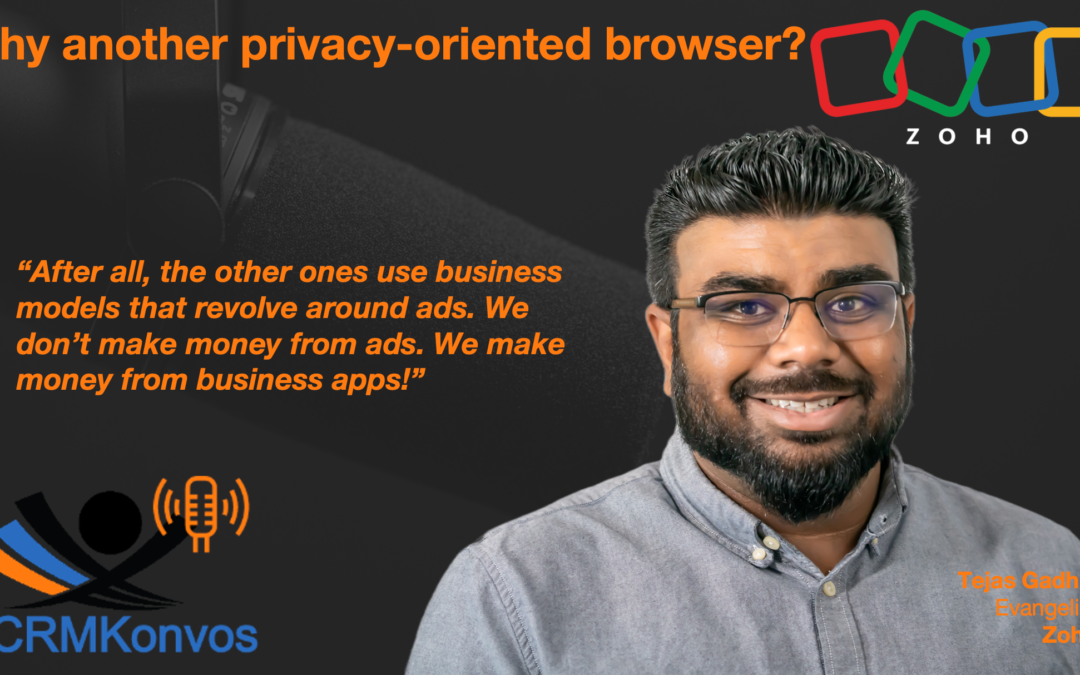
Browsing in privacy with Ulaa? Here’s why!
During Zoho’s signature event Zoholics in Austin, the company announced the availability of Ulaa, the new Zoho web browser. Of course, Ulaa does have a meaning. It is a Tamil word that means journey or path. Tamil is the language spoken in Chennai, the capital of Tamil Nadu, where Zoho’s HQ is situated. Similar to Safari or Internet Explorer it signifies that the web is about discovery. Ulaa is a privacy orientated webbrowser that is based on Google’s Chromium engine. It has been built specifically to help users protect their online privacy by offering capabilities to block tracking and website surveillance. According to a study by YouGov, this is something that two thirds of consumers want, as they feel that tech companies have too much control over their personal data. The 2022 Norton Cyber Safety Insights Report Special Release – Online Creeping even found that globally, 85 percent of internet users want to do more to protect their privacy, while 80 percent say that they are concerned about data privacy. Almost 70 percent say that they are more alarmed than ever. So, there is clearly a case for privacy-oriented browsers, also one more browser, as there are already some existing ones, like Brave or DuckDuckGo, even Safari. We had the chance to talk to Tejas Gadhia, Zoho evangelist in charge of Ulaa about the rationale behind Zoho developing a web browser and what the future will bring. You can watch the full interview here. Why did Zoho build a browser? According to Tejas, there hasn’t been much innovation in the browser market lately. Some browsers came, like Brave or DuckDuckGo, and went (TOR, anybody?),...
The State of Customer Experience: A Small Business Perspective
The following article is an excerpt of a White Paper by Customerization’s Kira Tchernikovsky. Kira is the co-founder and CMO of this Canadian consulting company that focuses on helping SMBs stand out through superior business automation. You can download the full white paper here. Customer experience (CX) is how a customer feels about a company over time. Creating great CX is about positive emotions, building trust, and leaving a lasting impression with customers. Orchestrating excellent customer experience is essential for building brand loyalty and increasing customer retention. It’s also becoming increasingly important as more and more clients. B2C and B2B, choose to do business with companies who personalize interactions and prioritize customer satisfaction. While larger businesses have the resources to invest in Customer Experience (CX), small businesses (and by small we mean <200 employees) face unique challenges in providing an outstanding CX. Here are a few common challenges for small businesses: Limited resources: Small businesses have limited financial resources and less employees to dedicate to a comprehensive customer experience solution. This makes it difficult to compete with larger businesses that have more resources to invest in customer experience initiatives. Lack of expertise: Small businesses may not have in-house expertise in areas such as customer experience design, research, and analytics. Therefore, it is not easy for SMEs to develop and implement an effective customer experience strategy. Limited data and insights: Small businesses may have limited access to customer data and insights, which in its turn, prevents them from objectively understanding customer needs, preferences, and pain points. How can they then build effective customer interactions and experiences? Limited technology resources: Small...