

How to make Zoho a business’s operating system
During ZohoDay 2022, I had the chance to have a longer conversation with Adi Mula, founder and CEO of Foodhub. If you do not want to read too much but prefer watching the edited interview, you can do so here. Similar to GrubHub and DoorDash, Foodhub allows residents of the UK, India, Egypt, Australia, New Zealand, and Malaysia, the US and some more countries to order food to be delivered from a variety of local restaurants; unlike those other sites, Foodhub does not charge service fees. Foodhub currently has about 1,100 employees. Most of them are using Zoho products in one way or another and many use multiple Zoho products. Foodhub started its Zoho journey with the goal of simplifying processes and to be able to provide every team with simple and easy to use tools that will help them do their jobs. Originally, Foodhub worked with a set of interconnected, yet overly complicated applications. This journey started with implementing Zoho CRM because this was where the pain was biggest in this area. The sales teams in the various countries have different needs, yet the business needs them use a common foundation. The old solution did not support this. One of the problems that were caused by this was that Foodhub used huge Excel sheets to support its sales process. Besides the obvious complexity, this also caused a GDPR risk, as these sheets contained lots of personal data that could have easily be shared online. Moving to Zoho CRM immediately solved this problem by enabling model processes that solved the needs of the different regions while implementing an adequate security and permission model. Migrating...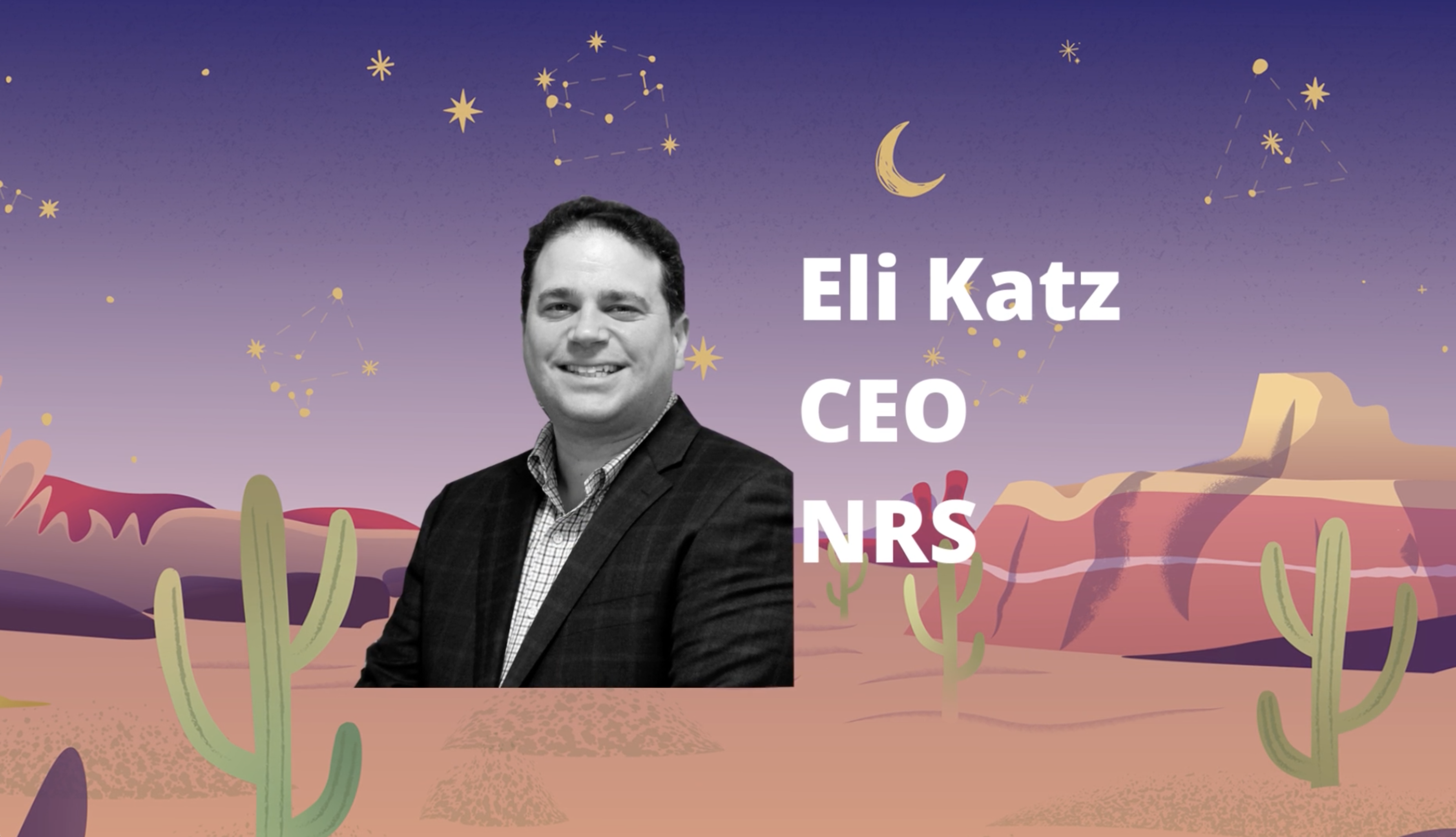
How to “Zoho-matize” a business
During ZohoDay 2022, I had the chance to have a longer conversation with Elie Katz, founder and CEO of National Retail Solutions, NRS. if you do not want to read too much but prefer watching the edited interview, you can do so here. NRS was founded in 2015 and has since then grown its customer base to more than 17,000 retail stores across the United States. NRS is a part of IDT, a provider of communications and payment services to individuals and businesses. The business provides POS and payment processing software, focusing on small, independent retailers, who want to not only survive but also thrive in a big box environment. The NRS POS system is built to help stores organize, attract customers and increase revenue; it includes a loyalty coupon program and other bells and whistles. An important point is the NRS outside-in philosophy, which is defining its own success as a result of making its customers successful by being able to address their needs. The challenge that Elie, his business, as well as the parent company, needed to support requires quite sophisticated own customer service and sales software; there is a widespread salesforce to be supported along with a good number of very different customers with disparate needs and service requests. The team learned early on that it needed a CRM system. This system was originally supposed to be implemented on a well-known platform – that remains unnamed here. The reason being that it was already being implemented at another branch of IDT. This system needed many third party tools and consequently the implementation dragged along at considerable cost, without showing adequate progress...
How to make Hyperpersonalization work
One of the most overused buzzwords these days is „hyperpersonalization“. But, apart from the hyperbole around it – pun definitely intended – there are a lot of questions around this term, starting from, what is it? What is the purpose? Does it work at all? Does it have one or is it just a fad? After all, we know personalization since the early 80s, just that we called it 1:1 marketing then. Of course, we didn’t have the technology then to scale it, which is definitely something that we do have now. On the other hand, improving technology is faced by an increased desire for privacy, which is at odds with what hyperpersonalization, personalization in general, stands for. This blog post is based upon a CXChangersTalk that I had with CRM industry analyst Marshall Lager, who observes and shapes the industry since 2004 in various dependent and independent roles, most notably atCRM Magazine, G2 and Informa. In his words, hyperpersonalization “doesn’t go away and evolves constantly.” And, of course, it doesn’t always work! Marshall explains that one of the main reasons for this is that not every business has the right idea of what personalization, let alone hyperpersonalization, is. He continues that “To some, putting somebody’s personal name in an e-mail or in an ad on Facebook is hyperpersonalization because it’s going right to you. It’s your name. Hey Thomas, look at this. Your name is on a t-shirt that I am holding up on this ad. That’s not hyper personalization, that’s mass marketing, that just happens to have your name on it.” But then, how does it work? Or rather: What is...
How to create value with a CDP
These days, Customer Data Platforms, or in brief CDPs, are one of the most discussed topics in the CX industry. Last time I looked, the CDP Institute counted more than 150 CDPs of different flavors that target different business challenges. This raises a lot of questions, chiefly: What is a CDP? Which business challenges do companies solve with a CDP and how do they approach the solution, i.e. how do they proceed implementing one? Let’s start at the beginning. According to the CDP Institute, a CDP is “packaged software that creates a persistent, unified customer database that is accessible to other systems”. Figure 1: A simple model of CDP functionalities Functionalities offered by CDPs reach from simple data gathering and unification to the activation and even active usage of information derived from customer data. This already shows the different business challenges that can be addressed with a CDP. It also shows, that the business challenges can be addressed in a way that provides increasing value to the business. As an aside: A good CDP always bases on a solid foundation of customer identities and the consents that customers have given. The second important question is how a CDP can or should be implemented. What is a viable approach? To learn more about these questions, we spoke with Mario Kurmann, Senior Product Manager CRM at Migros Fachmarkt AG in Switzerland. Mario was responsible for the initial CDP implementation and now for its continuous improvement. Migros is one of Switzerland’s biggest retailers. Fachmarkt, as part of Migros, basically operates five independent brands in the areas of sports, electronics, home improvement, furniture...