

Customer Service beyond the Chatbot Hype
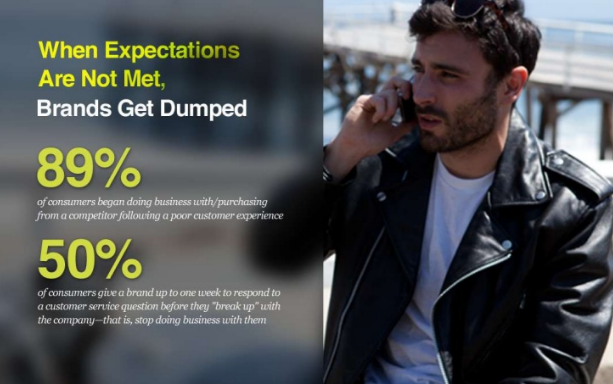
2016 has been predicted to be the year of conversational commerce, and I’d say that this prediction largely held true. Conversational interfaces have become more and more mainstream, and their support by AI and bots has become all the rage. While people more and more turn to their smartphones and Google to find service and get answers to their questions, companies are increasingly looking at bot support to increase the efficiency of their call centers. But where is reality? In their 2016 hype cycle on emerging technologies Gartner places Conversational UIs in the innovation trigger phase with a predicted time of 5 – 10 years to mainstream adoptions Machine Learning on the peak of inflated expectations with a period of 2 – 5 years to mainstream adoption Forrester Research in their recent AI tech radar places virtual agents and machine learning into their growth phases of their respective life cycles, giving them 5 – 10 years to mainstream, while acknowledging a successful trajectory. So, clearly, AI and conversational systems are strategic. At the same time Abinash Tripathy, CEO of helpshift, a leading helpdesk company providing users with instant, proactive, and personalized in-app support, feels that “we are closer to IoT than to having really helpful bots”. Some bots are actually harming the customer experience. And he is right. Why? Several reasons. Essentially artificial intelligence, driven by machine learning or deep learning, is not yet intelligent enough. Too many bots are still driven by decision trees, which severely limit the possible conversations that the bot can serve. Second, bots’ ability to understand natural language is still lacking, albeit improving, and...
Apple Pay holds Banks in Stranglehold! Really? Poor Banks
In the past days two interesting articles around banks and banking innovation found their ways into my browser. One by Knowledge@Wharton on “How Banks Can Keep Up With Digital Disruptors” and the second one by Mobile Commerce Daily on “How four Australian banks are challenging Apple’s stranglehold on mobile payments”. The first article is essentially stating that banks are not using the “essential assets need to turn aside many of the assaults on their business now underway from fintech”, while the second one seems to sing the song of the poor banks that are held at a disadvantage by evil Apple. The four banks that challenge Apple are Bendigo and Adelaide Bank, Commonwealth Bank of Australia, National Australia Bank, and Westpac. Another large bank, ANZ Bank, cooperates with Apple by offering their customers to import cards into the Apple Wallet and using Apple Pay, and is not involved. But what do the banks want? According to the article they want access to “Apple’s Apple Pay system as well as access to the NFC capabilities of the iPhone”, being narrowed down to “require Apple to only disclose access to the NFC capabilities of the iPhone to the banks and therefore their customers.” Essentially they want to be able to build their own mobile payment system and not go through Apple’s wallet and still be present on “one of the most popular smartphones in the world” And yes, it is true that Google’s Android operating system allows more access to the phone’s NFC capabilities than iOS. On the other hand banks are seeing disruption coming. Fintech companies are coming up left,...
Marketing owns the Customer Data! Does it?
The customer, the elusive entity that every business is about – or at least should be about. The customer gets targeted, marketed to, sold to, serviced, analysed, shall have a positive customer experience, and sometimes even is made happy. The ‘customer’ as an entity is owned by the marketing department, err, the service department, oops, sales … or is it IT? After all IT is likely to run the CRM system. If it is not a cloud system, that is. In reality it is different in every company and probably rightfully so. On the other hand every department has their own requirements and the ‘owner’ of an entity is likely the one who decides upon the relative priorities of these requirements. And the fulfillment of requirements regularly decides upon the effectiveness and efficiency a business unit can operate with. Now the marketing department is heavily invested in collecting all data that a customer leaves behind in order to understand behaviours and be able to entice known and unknown customers into buying (in the case of a B2C business) or solidifying the lead to an extent that it can be handed over to the sales department (in case of a B2B business). They are interested in lots of attributes, segmentation, slicing and dicing towards various dimensions. Born were Data Management Platforms, and Customer Data Platforms, and overall a very thriving industry of Marketing Technology. The sales department now is interested in opportunity management, CPQ (configure, price, quote), relationship with the buyers and their potential influencers, closing the deal as efficiently as possible. Born is a world of sales support software....