thomas.wieberneit@aheadcrm.co.nz
Helpshift to Salesforce Integration – Where Peanut Butter meets the Jelly

Helpshift to Salesforce Integration – Where Peanut Butter meets the Jelly

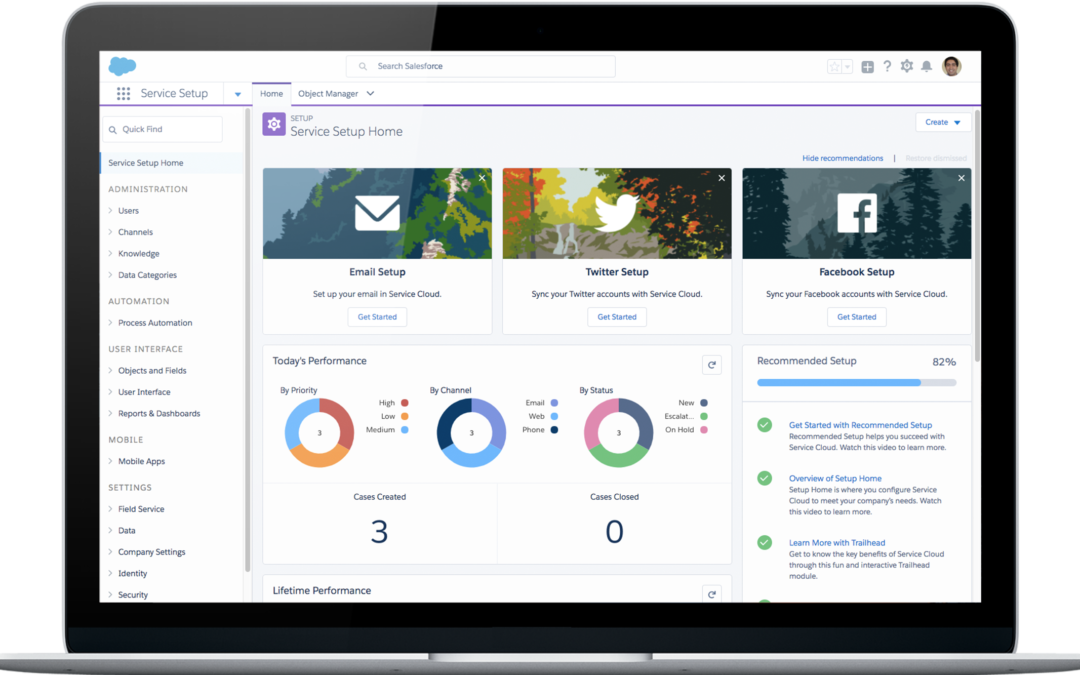
The leading in-app support company Helpshift just released a seamless integration with the Salesforce Service Cloud. This integration is now available on AppExchange. Here a copy of the press release for your convenience, followed by my analysis:     Helpshift Announces New Integration Capabilities for Its Customers on the Salesforce AppExchange, the World’s Leading Enterprise Apps Marketplace SAN FRANCISCO – (BUSINESS WIRE) – MAY 25, 2017 – Helpshift today announced an integration with new capabilities available on the Salesforce AppExchange. This integration is meant to improve the mobile user experience by enabling service agents to deliver support to app users directly from within their Salesforce Service Cloud Dashboard – In-app! When a customer contacts support from inside the Helpshift-enabled app, a Salesforce case is created that the agent responds to, creating an in-app conversation. Customers get notified via banners, notifications and badges, enabling them to continue at their pace. “Organizations are seeing an explosion in demand for mobile solutions from their customers,” said Esteban Kolsky, president of thinkJar, a customer strategies advisory firm, “and they quickly realize they can’t offer outdated and incomplete solutions without real time data. Direct integration with systems of record are at the core of their strategies to support this trend.” Built on the Salesforce Platform, the Helpshift integration is now available on the Salesforce AppExchange. Enterprises can benefit in the following ways: In-app Messaging: Helpshift’s new integration capabilities allow existing Salesforce customers to provide support to mobile customers, which extends their ability to reach mobile customers where it matters: Directly in the app, and supported by the smartphones’ powerful notification mechanisms. Enhanced Knowledge Capabilities:...
Mobile In-App Support – A brief Overview

Mobile In-App Support – A brief Overview

In a mobile world, where the smartphone has become the command center of our lives support needs to be offered from directly inside the app, using in-app messaging. This way the advantages of being able to send relevant contextual information about the state of the app to the service agent and the ability to engage in a service conversation via a conversational UI can get brought to full advantage. The user is identified, relevant information has been gathered, which the service agent can use right away. This leads to capabilities that a genuine mobile in-app support system needs to have on top of generic help center functionality: In-App FAQ that gets pushed out to the phone and is available in an offline scenario Collation of meta data about the phone, user and the incident that created the support call, along with the ability to send that to the customer service center In-App messaging/conversational UI in combination with push notifications Automation to properly route incoming issues and to increase the issue resolution efficiency An ability to integrate into CRM- or other systems An ability to selectively and proactively engage with users, to e.g. support onboarding or push notifications about special situations to relevant parts of the user community. It is possible to find vendors that deliver parts or all of this in order to deliver a mobile service experience. Platforms like G2Crowd, but also traditional analyst companies like Forrester and Gartner give some leads. Gartner lists Salesforce, Pegasystems, Oracle, Microsoft, Zendesk as leaders in customer engagement centers, with SAP being the only Challenger and Lithium the only Visionary. None of...
Google and SAP – A Marriage in the Clouds

Google and SAP – A Marriage in the Clouds

On Mach 8, 2017, SAP and Google announced another marriage in the cloud during Google’s Cloud Next event: SAP HANA is certified on Google’s Cloud Platform GCP, and is generally available now. SAP Cloud Platform and more products and solutions are to follow. The Google Cloud Launcher marketplace will be utilized to offer and deploy to and for customers and partners, starting with SAP HANA, express edition, which is already available, too. Further topics that are covered by this partnership are Improving Google’s containerization technologies for enterprise workloads Security, privacy, and integrity of customer data in the cloud. As part of this SAP software shall act as a data custodian (NB: How that works in legal and political environments remains to be seen) and joint solutions for access control, governance, risk and compliance shall get developed Integrate Google’s G Suite into SAP applications. This has already been implemented for Identity and Access Management. More on the still fuzzy side are end-to-end integrations and collaborations in the areas of AI and machine learning. True to the SAP mantra of being an ecosystem player this is all about choice – choice for the customer to implement what is best for them. My Take Another interesting one! Good Win for SAP SAP now covers all major cloud platforms. HANA is now certified on AWS, Azure, and GCS, apart from running in the SAP cloud. With this SAP now has the broadest footprint when it comes to running on an IaaS platform. With the SAP Cloud Platform being available soon there also will be a very powerful PaaS solution on one of the...
Watson meets Einstein – Elementary, my Dear Holmes

Watson meets Einstein – Elementary, my Dear Holmes

This week Salesforce and IBM announced a global strategic partnership to deliver joint, AI based solutions based upon Salesforce Einstein and IBM Watson, their respective AI platforms. The upcoming solutions will be designed to “deliver everage artificial intelligence and enable companies to make smarter decisions, faster than ever before. With the partnership, IBM Watson, the leading AI platform for business, and Salesforce Einstein, AI that powers the world’s #1 CRM, will seamlessly connect to enable an entirely new level of intelligent customer engagement across sales, service, marketing, commerce and more.” IBM Watson will be connected to the Salesforce Intelligent Customer Success Platform in a way that augments the customer specific insights that are delivered by Einstein with its structured and unstructured data that comes from a variety of sources, in order to be able to use specific as well as more generic, yet industry relevant, information. “Together, Watson and Einstein will ingest, reason over and derive recommendations to accelerate decision making and drive greater customer success.” Initially planned solutions are “IBM Watson and Salesforce Einstein Integration: Integrating IBM Watson APIs into Salesforce will bring predictive insights from unstructured data, inside or outside an enterprise, together with predictive insights from customer data delivered by Salesforce Einstein to enable smarter, faster decisions across sales, service, marketing, commerce and more. For example, by combining local shopping patterns, weather and retail industry data from Watson with customer-specific shopping data and preferences from Salesforce Einstein, a retailer will be able to automatically send highly personalized and localized email campaigns to shoppers.” “IBM Weather Insights for Salesforce: The Weather Company, an IBM business, will power a new...
Gartner MQ BI and Analytics Platforms – Lots of Movement

Gartner MQ BI and Analytics Platforms – Lots of Movement

Last week Gartner published the updated version of its Magic Quadrant for Business Intelligence and Analytics Platforms, and I need to say that there has been a lot of movement in both directions, up as well as down. There has been a lot of reshuffling especially in the Visionaries quadrant. This can partly be attributed to a changing market that caused Gartner to combine a few of last year’s assessment criteria as well as adding two more critical criteria as below: Critical Capabilities Dropped or Changed: Combined BI Platform Administration with Security and User Administration Modified Data Source Connectivity to Data Source Connectivity and Ingestion Combined Publish Analytics Content and Collaboration and Social BI to Publish, Share and Collaborate on Analytic Content Added Visual Appeal to Ease of Use Capabilities Added: Smart Data Discovery Platform Capabilities Workflow Integration Smart Data Discovery emphasizes the increasing importance of AI and machine learning as part of analytics systems. Gartner defines it around the automatically “finding, visualizing and narrating of important findings such as correlations, exceptions, clusters, links and predictions in data that are relevant to users without requiring them to build models or write algorithms. Users explore data via visualizations, natural-language-generated narration, search and natural-language query technologies”. Workflow Integration acknowledges that there is no actionable insight if there is a standalone analytics system. It is defined around the number of products “needed to deliver the critical capabilities and the degree of seamless integration and workflow between capabilities/components”. This has been true for a long time, but hey, better late than never. Gartner itself states that the changes have been major and that...