
Clash of Titans: Microsoft and SAP weigh in
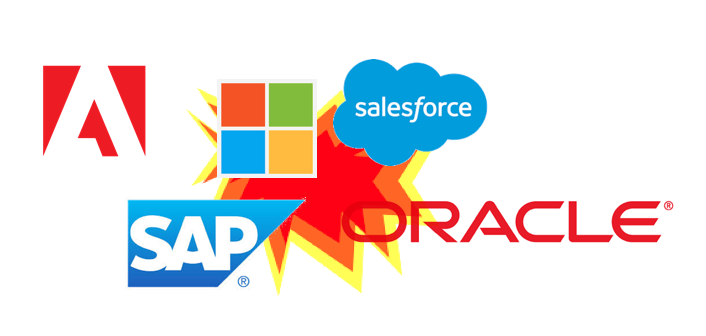
A little recap As it has been some time since I published Clash of Titans – Platform Play, the first part of this little series, let me start with a little recap. The business applications market, especially the CRM market, is evolving fast. CRM has morphed from concentrating on transactions to become an enabler of engagements. Engagements in turn result in experiences. And positive experiences are what companies want to achieve. In a digital world this is possible only if companies rely on a foundation, a (technical) platform. Becoming the provider of the dominant technical platform therefore has become the main goal of of the big business software vendors. However, even governing a great technical platform is not enough. Software vendors that want to be successful platform players need to be able to deliver on four areas to succeed: Platform (IaaS/PaaS) Ecosystem Insight Productivity Only if they deliver on all four aspects are ‘platform players’ able to provide their customers with what they need to involve themselves in digital engagements that result in sustainably positive experiences. I will look at how the big four are measuring up in this and the next article of this little series. Microsoft and SAP will be the starters. Then I will look at Oracle and Salesforce. I might conclude with some surprise additions. But let the games begin! Microsoft Microsoft is the (not so, if you look sharply) hidden champion of this game. Actually, I think that Microsoft is the 800 pound gorilla in this game. It is Microsoft’s objective to become the fabric that connects enterprises of all sizes with their stakeholders,...
Clash of Titans – Platform Play
A lot has evolved since my Clash of the Titans post that looked into how the big 4.5 (Microsoft, Oracle, Salesforce, SAP, and Adobe) and others are positioning themselves and their platform in the greater CRM arena. First, the commoditization of the business application has accelerated and the vendors’ focus on the underlying platform has increased. CRM, and enterprise software in general, has always been a platform play although this has not always been recognized and sometimes even negated. The obvious reason for it being a platform play is that the creation of positive customer and user experiences need a consistent technical platform. Or else we are ending up in engagements that are fragmented across interactions. This results in inconsistent and poor experiences. So far, so well known. A bit less obvious is the fact that there will be only few dominant platforms. Vendors, who want to become and stay successful on a grand scale need to be one of these few platform providers and attract partners and customers. This is the reason why I consult my customers that one of the very first IT strategy decisions that they need to take is the platform decision. As the article got a little longer this time and as I do not tend to write articles that are as long as dear friend Paull Greenberg’s (maybe I should consider to?) this revisit of the Clash of the Titans will become a two or three piece series, first covering the framework I want to use, the very definition of what I talk of when saying that CRM is a ‘platform play’. The...
Einstein smartens up Salesforce Service Cloud
The News A few days ago Salesforce released a new iteration of its Service Cloud Einstein after infusing its artificial intelligence, Einstein, into the Service Cloud in February 2017. This release comes with three major enhancements to the Service Cloud: Einstein Bots for Service Lightning Flow for Service Einstein Next Best Action Einstein Bots for Service is providing the ability to easily configure chat bots that enable instant response to customers and a seamless handoff to customer service agents. Lightning Flow for Service gives companies the ability to automate processes with contextual, step-by-step guidance for fulfilling requests and resolving issues, using a graphical interface. Einstein Next Best Action is delivering intelligent recommendations and offers on any channel to increase customer satisfaction. While Einstein Bots for Service and Lightning Flow for Service are in General Availability since July 11, 2018, Einstein Next Best Actions will remain in a Pilot phase for some more time. The reason for this is that Salesforce wants to be double sure that this functionality is reliable. It needs a good amount of data and a good training set. And Salesforce cannot look into the data. The bots themselves do need to get trained and, once active, take feedback from the service agents. All three features work hand-in-hand. Salesforce uses a credit card scenario to make this point. When a customer goes to the web site for help the chat bot takes over and gathers the necessary contextual information and then escalates the issue to a customer service agent who continues the chat at the position the chat bot exited with all information available. A Lightning...