by twieberneit | Dec 10, 2021 | Blog |
The year 2021 comes to an end. More than three years have gone by since the last look at the Clash of Titans, an analysis of how the then big 4.5: Microsoft, Oracle, Salesforce, SAP, and Adobe – along with some other players, are shaping the greater CRM and CX arena. A lot has changed since Thomas Wieberneit published his 2018 series that consisted of 4 articles: Platform PlayMicrosoft and SAP weigh inThe War Cry: Oracle and SalesforceThe IaaS Platform Providers It is obvious that the commoditization of the business application continues, and the vendors’ focus on the underlying platform has even increased since 2018. CRM, and enterprise software in general, has always been a platform play although this has not always been recognized and sometimes even negated. Two obvious reasons for it being a platform play is that the creation of positive customer and user experiences needs a consistent technical platform, or we end up with engagements that are fragmented across interactions. This results in inconsistent and poor experiences. The second reason is that it needs a technological platform to enable and grow a thriving ecosystem. Vinnie Mirchandani in January 2020 stated that Enterprise Software Platforms have so far underperformed. Mirchandani looked at Microsoft, SAP and Salesforce. He basically argues, without providing too many details, that the major enterprise software vendors’ platforms are all lacking ambitious goals and do not aim high enough. One of his major points is that none of these vendors has put enough emphasis in empowering, nurturing and growing their respective partner ecosystems to take advantage of the software platforms by augmenting the applications delivered by the platform vendor...

by twieberneit | Dec 8, 2021 | Blog |
These days every significant software vendor and some others, too, is positioning itself as a CX- and/or a platform player. By now, it is well known, what it means to be a platform player, and this is also not the main topic of this post. Just as much: In order to be a significant CX player, one quite simply needs to be a platform player. Also, regardless of whether one has a platform or not, if everyone is a CX and a platform player, then obviously this is nothing that differentiates one vendor from the other anymore. Customers meanwhile nearly expect a set of solutions by one vendor being built upon one platform – or at least to appear like they are built on one platform. This basically means that “platform” as a thing to emphasize on has reached its zenith. And then, there is an additional problem associated with the platform game. A platform market is a kind of a winner takes it all market. Following the analysis and argumentation of Ray Wang in his new book Everybody Wants to Rule the World, in a platform market there will be only two major players. All other players are becoming insignificant or will vanish. While this sounds somewhat dystopian the point that I want to make is that there will not be a great many successful and strong players in a platform market. To use a metaphor, at one point in time a few vendors will have created enough gravity to become the entity that customers are attracted to. It is also visible that the first vendors have understood this and are acting...
by twieberneit | Sep 25, 2021 | Analysis, Blog |
The News On September 20, 2021 Oracle announced during an Oracle Live event named “The future of CRM” Oracle Fusion Marketing, which is not the same as Oracle Marketing. According to Rob Tarkoff, EVP and GM Oracle Advertising and Customer Experience, Oracle Fusion Marketing is a layer that automatically executes account based marketing and sales campaigns. The product aims at enabling an end-to-end process from creating a marketing campaign to closing the sale, bridging the divide between marketing and sales. It does so by combining services that are delivered by three products: Unity, Oracle‘s Customer Data PlatformFusion Advertising, Oracle‘s digital advertisement platformFusion Products & References, Oracle‘s recommendation platform under one easy-to-use user interface that is modeled as a guided procedure. Oracle Fusion Marketing simplifies and accelerates the creation and execution of marketing by Building a target audience of known contacts: Marketers can select a product or service that is the focus of the campaign, and then select a list of known contacts from any CRM systemExpanding your audience: From that audience, Fusion Marketing will automatically generate a highly targeted audience profile for use in online advertising to target people who are potentially relevant to your campaign – byt unknown to your contact databaseIdentifying the best customer references: based on the focus of the campaign and specific industry of each customer, Fusion Marketing recommends the best reference stories to promote in the campaignSimplifying campaign configuration: Fusion Marketing provides a single user interface to assign all of the campaign assets required to run your campaign across email, website landing pages, and advertising channelsLaunching the campaign: the marketer can easily set up advertising budget, star and...
by twieberneit | Jan 16, 2021 | Blog, CRMKonvos |
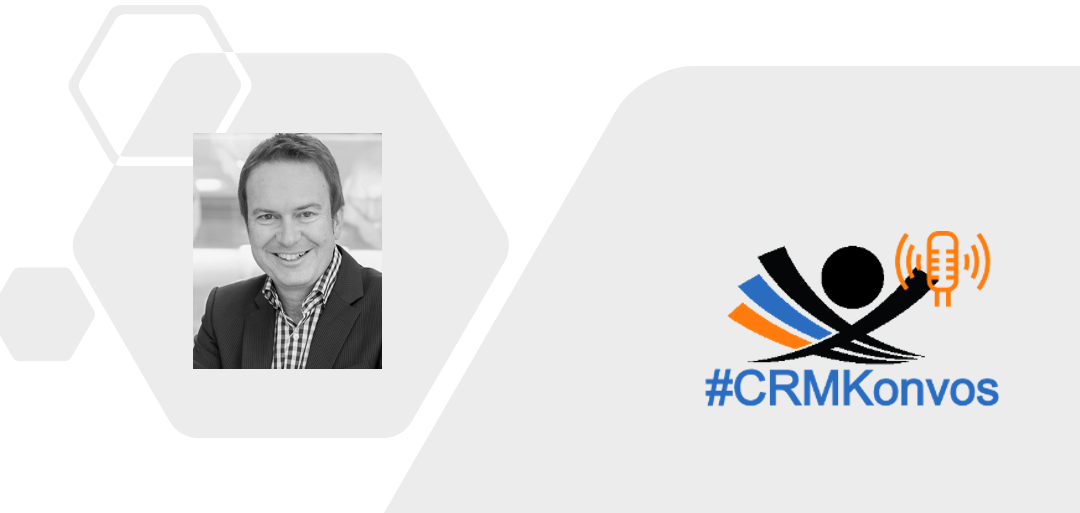
The CRMKonvos team started into the new year talking with Daniel Renggli, Director Field Marketing North at Oracle. As we all know, Oracle has a vast range of solutions across the whole value chain and is one of the few that can (almost) support a whole enterprise with its solution. Oracle was also known as a cloud laggard – a notion that got vastly changed in the last few years. And Oracle governs the complete hardware and software stack to support businesses, which again is rare in the enterprise applications world. The company’s IaaS infrastructure even can extend into the customer data center, which is a very interesting offering. Last, but not least, Oracle has a strong set of CRM- and CX applications, on premise and in the cloud, with the cloud software being established in the market in the past years. Oracle is one of the contenders in the #ClashOfTitans. All the more reason to talk with an Oracle representative about what is great CX and how to get there. Being confronted with the complete CRMKonvos gang, Daniel took his stand. And he did well. We learned a lot. You can, too. Here is the recording of the conversation. It is worthwhile the time. Trust...
by twieberneit | Sep 25, 2020 | Blog, CRMKonvos |
#BeyondCXM. To turn customers and employees into fans as a possibiility to achieve sustainable business is what Ralf Korb and Thomas Wieberneit as hosts discussed with Dr. Winfried Felser and Marc Schmid, CEO of Novadoo. Sometimes the magic of customer experience if found beyond normal processes and classic expectations and therefore individual, consumable, experiences. This happens especially if one offers a genuine and heartfelt ‘Thank you’ and with that creates an emotional bondo or relationship with the customer, instead of just a transactional one. Leading up to this: What are companies like Microsoft, Oracle, Salesforce, SAP, or Zoho currently doing and how can these developments help with a Corona restart with ten times the current possibilities? Big topics, discussed in this CRMKonvos episode. The episode is in German...