
CRMKonvos #17 – Entering The Dark Side of the Cloud
#CRMKonvos #17 – The dark side of the Cloud – danger, hope, liability, subscription, privacy … are they all gone? Quo vadis on premise and managed services? We are looking at the dark side of the cloud, its effects, chances and possibilities. We are also analysing the acquisition of Emarsys by SAP, do a little breakdown of the Microsoft cloud services that got announced last week (MS Teams anyone?) and general perspectives. Is the coveted 360 degree on the customer an illusion? And there is some harsh reality facing some suboptimal corporate structures. Fair play, as lived by Zoho, is another topic to be covered … Expectations towards SAP and its Customer Data Platform CDP++ are going towards the next level. Is SAP planning to destroy the silos to create more transparency? Is CDP really some BS (hint: not really) or can it be used in a valuable (for the customer) way)? A CX platform or at least a #COTP (Customer oriented Transaction Platform) are possible ways. Lots of ground to be covered. This episode is in...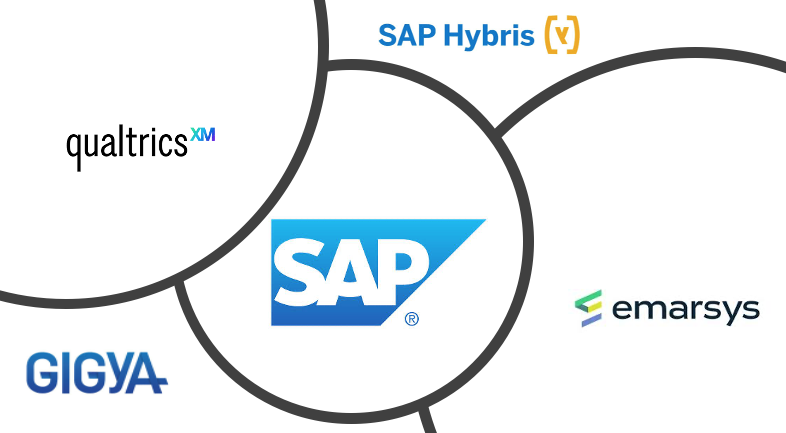
SAP to acquire Emarsys in an aggressive move
The News On October 1st, 2020 SAP announced its intent to acquire Emarsys, a leader in the personalization area and omnichannel customer engagement management specialist. The transaction is expected to be completed in Q2/2020 and still subject to regulatory approval. The purchasing price is not disclosed. According to Crunchbase, Emarsys was funded with $55.3M US by Vector Capital in two funding rounds 2015 and 2016. Not being a financial analyst, I would expect a purchasing price of north of $ 500M US. Emarsys positions itself as a customer engagement platform that combines omni-channel automation, personalization, loyalty management and reporting/analytics. The company has more than 1,500 customers, makes about 2/3 of its revenues in the EMEA region and has a pretty strong partner network including technology and agency partners. Key commerce integrations include Adobe (Magento), Salesforce, Shopify and, of course SAP Commerce. On top of this, the platform brings prebuilt industry specific use cases and analytics into the fold. According to Christian Klein, CEO SAP, “once the transaction closes, SAP will enable brands to connect every part of their business to the customer, including experience data. We will deliver a portfolio for a ‘commerce anywhere’ strategy allowing for hyperpersonalized digital commerce experiences across all channels at any time”. Bob Stutz, president SAP Customer Experience, adds that “with Emarsys technology, SAP Customer Experience solutions can link commerce signals with the back office and activate the preferred channel of the customer with a relevant and consistently personalized message, allowing customers the freedom to choose their own engagement”. The bigger Picture The ability to segment in real time becomes more and more important,...
CRMKonvos – Mitch Lieberman on CX, CDP and Conversational Excellence beyondCXM
During this episode we talked with Mitch Lieberman who has quite some experience in the CRM industry, on the vendor- and analyst side. He was with Epiphany, Sugar, and with G2, to name but a few.He has the insight and the sharp mind that makes this conversation particularly interesting, without me diminishing the other ones, though.Mitch certainly got our grey matter into high gear during our conversation that started with CX, went into a solid discussion of the value (what is it?) of Customer Data Platforms, CDP, on to conversational systems – and back. Btw, what is a CDP? Let Mitch provide his interesting view.We learned a lot.You can, too.This conversation is in English, apart from a few minutes at the beginning and the...