

Zoho – A True Unicorn
End of January Zoho held its 2020 Zoho Days, an analyst summit, which I was happy to attend, along with more than 60 colleagues, as the only analyst from Germany, as it seems. Sadly, it took me quite a while to complete this – Zoho deserves a faster commentare. But hey, let’s look forward and get rolling. Zoho is a privately owned enterprise software company that has quietly evolved from a small software company in 1996 to an ambitious global player that serves the SMB- and enterprise CRM market with cloud applications. The company has a set of 45+ business apps with more than 50 million users, 10 data centres and counting, and is available in 180 countries. The company is profitable and maintained a CAGR of more than 30 percent over the past five years. But why quietly? Because Zoho managed its growth pretty unusually (almost) fully organically with only very minor acquisitions. Crunchbase lists one. Following this unique approach, which defies the traditional law of going big fast, the company managed to build a solid platform with a unified data model that allows it to crank out amazing software at an incredible speed, and with a track record of growth that is well in the double digits. Zoho offers a suite of business, collaboration, and productivity applications, supported by development environments, services and infrastructure. Besides CRM, the applications cover a good part of the value chain, including some ERP type of applications, like order management, warehouse management, or billing and project management, HR and accounting. These apps are built upon a services oriented soft- and hardware stack...
Clouds, Data Models, and Experiences – Three Entities, One Topic
After having covered some press releases about new releases and commenting some interesting organizational changes it is time to have a look at another topic – the need for consistency in a suite of cloud products. Consistency not only in the most obvious part of a family of products and solutions – the user interface – but the more important aspect of consistency, namely the data model. If you wonder how this relates to customer experience I invite you to read on. This post is actually spurred by a brief conversation that I had with Jon Reed of Diginomica about this very topic during one of the recent CRM Playaz episodes. Btw, if you do not yet listen in to the LinkedIn conversations of CRM Playaz Paul Greenberg and Brent Leary, discussing important developments and current events in the world of CRM – then you should. Really! But I digress. Back to the topic. The question is about whether it is necessary to have a unique data model or not. And this question might be answered differently, based upon the definition of ‘data model’. There is no doubt that a unique data model across applications is very helpful, actually a necessity. Where there is doubt, is whether this data model needs to be defined on database level or not in order to be really helpful. My point of view is that it does not need to be defined on database level. This point of view might be contradicting some ‘common sense’ wisdom and the strategy that some very successful companies are pursuing, including Oracle – as it seems –...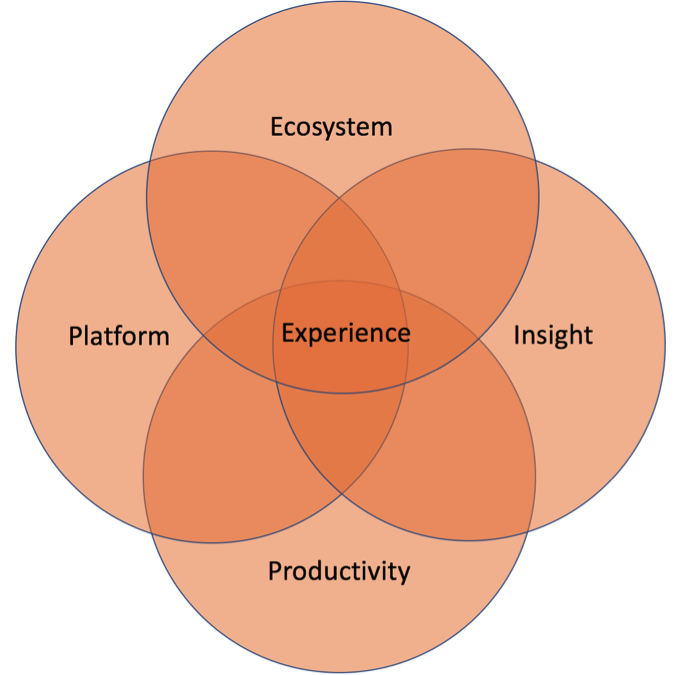
Clash of Titans – The War Cry: Oracle and Salesforce
More Food for Thought In the last article Clash of Titans – Microsoft and SAP weigh in of this little series, I discussed the strategy of two of the big four and how they are positioned in the platform play of the business software titans – and others. This article covers the other two: Oracle and Salesforce. These business software vendors are competing in a market that is changing – commoditizing – at a fast rate towards an experience market, and probably beyond, if I follow the argumentation and thoughs of CRM godfather and friend Paul Greenberg. Business application vendors can stay really successful only if they morph into platform players. And this platform is more than just a technology platform, but encompasses four dimensions. The four dimensions that are paramount to be able to deliver great engagements that result in lasting positive experiences are Platform (IaaS/PaaS) Ecosystem Insight Productivity In this article I look at Oracle and Salesforce and how they position themselves in this game of thrones. But now, without further ado, let’s dig into the topic. Oracle Since the launch of what originally was project Fusion and now is Oracle CX, the company has done a remarkable pivot from being an on premise company to becoming a cloud company. The company has its strength in being a full stack provider with a full range of business applications. However, its main strenght is owning the gold standard database engine that runs the majority of business workloads worldwide. From its overall technological profile one could position Oracle somewhere between SAP and Microsoft as it with Open Office also...