


What’s gonna happen with generative AI and CX in 2024?
It is this time of the year. Everybody (and their dog), has some predictions for 2024. As you can guess, reading this, I am participating in this game. Last year, I published three humble wishes to better the industry – and I am sad to say, that my three wishes stay wishes also in 2024. I’d say that this is partly because 2023 became the year of generative AI. We all know why. Pretty much every vendor got caught flat-footed by the meteoric rise of OpenAI. Correspondingly, in the course of 2023, we have seen a huge number of pre-announcements of one generative AI scenario or another being integrated into their software and then offered by enterprise software vendors. Mostly, these announcements were about low-hanging fruit. Which does not mean that they are useless or not valuable, quite on the contrary. Solutions, once they are available, have the potential to increase employee productivity and the customer experience. But, they are announcements or early adoptions. So, based on this, what will we see in 2024? And let’s limit ourselves to the realms of CRM, CX and customer engagement. Success stories The more announcements of something being available soon turn into actual usage, we will be able to see actual success stories. Customers will more and more move from trial mode to actually addressing business challenges and measure the degree of success of an implementation by the change of KPIs that can be attributed to this implementation. In some instances, we can see this already starting. Diginomica’s Jon Reed recently interviewed a representative of Loop insurance who gave some highly interesting...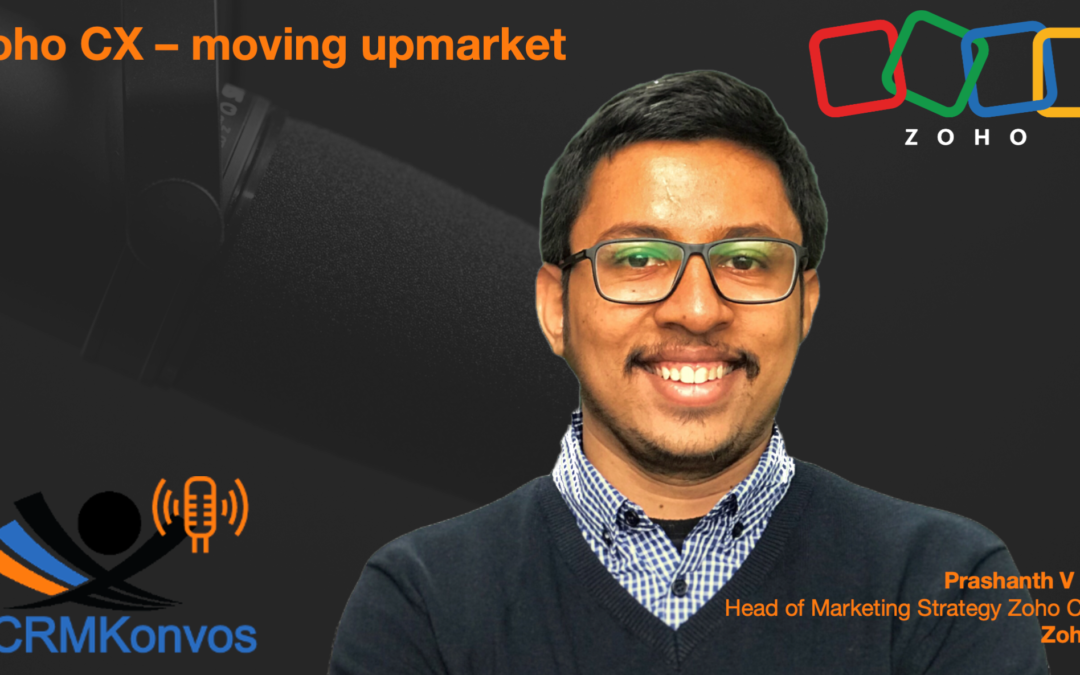
Value, not greed! How a business software vendor translates SMB success into the enterprise
Zoho is well known as a vendor for business applications geared towards SMBs. As many other companies do, Zoho wants to support the upper mid-market and enterprises, too. After all, successful SMBs may grow into become enterprises and that might attract other enterprises. So, there are a good number of good reasons to also support upper mid-market and large businesses. The company has actually followed this path for about five years and has set up an enterprise business solutions team to deliver solutions for enterprises. Still, it is a better kept secret that Zoho already has considerable momentum in the upper mid-market and enterprise segments. Zoho achieved a 65 percent year-over-year growth. The enterprise segment now represents about one third of the business. During its signature event Zoholics in Austin, the company on May 4, 2023, changed this and revealed its enterprise strategy. This strategy ultimately rotates around four pillars: Go-to-market, platform, new applications and enhancements, plus security and privacy. Zoho also backed up its continuing success story by inviting some customers to present their journey with Zoho as a panel and talking individually to analysts and media. Marshall Lager and I had the opportunity to speak with Zoho’s head of CX marketing strategy, Prashanth V K. We had a lot of questions and opened up with a barrage about what the customer profile for the Zoho enterprise business is. The interview can be watched here. Zoho’s head of CX marketing strategy explains how Zoho is successful in the enterprise market Starting with the definition of mid-market: Zoho defines mid-market companies as companies ranging from one hundred to one thousand employees; and Zoho...
The State of Customer Experience: A Small Business Perspective
The following article is an excerpt of a White Paper by Customerization’s Kira Tchernikovsky. Kira is the co-founder and CMO of this Canadian consulting company that focuses on helping SMBs stand out through superior business automation. You can download the full white paper here. Customer experience (CX) is how a customer feels about a company over time. Creating great CX is about positive emotions, building trust, and leaving a lasting impression with customers. Orchestrating excellent customer experience is essential for building brand loyalty and increasing customer retention. It’s also becoming increasingly important as more and more clients. B2C and B2B, choose to do business with companies who personalize interactions and prioritize customer satisfaction. While larger businesses have the resources to invest in Customer Experience (CX), small businesses (and by small we mean <200 employees) face unique challenges in providing an outstanding CX. Here are a few common challenges for small businesses: Limited resources: Small businesses have limited financial resources and less employees to dedicate to a comprehensive customer experience solution. This makes it difficult to compete with larger businesses that have more resources to invest in customer experience initiatives. Lack of expertise: Small businesses may not have in-house expertise in areas such as customer experience design, research, and analytics. Therefore, it is not easy for SMEs to develop and implement an effective customer experience strategy. Limited data and insights: Small businesses may have limited access to customer data and insights, which in its turn, prevents them from objectively understanding customer needs, preferences, and pain points. How can they then build effective customer interactions and experiences? Limited technology resources: Small...