
How to zohotize a global business
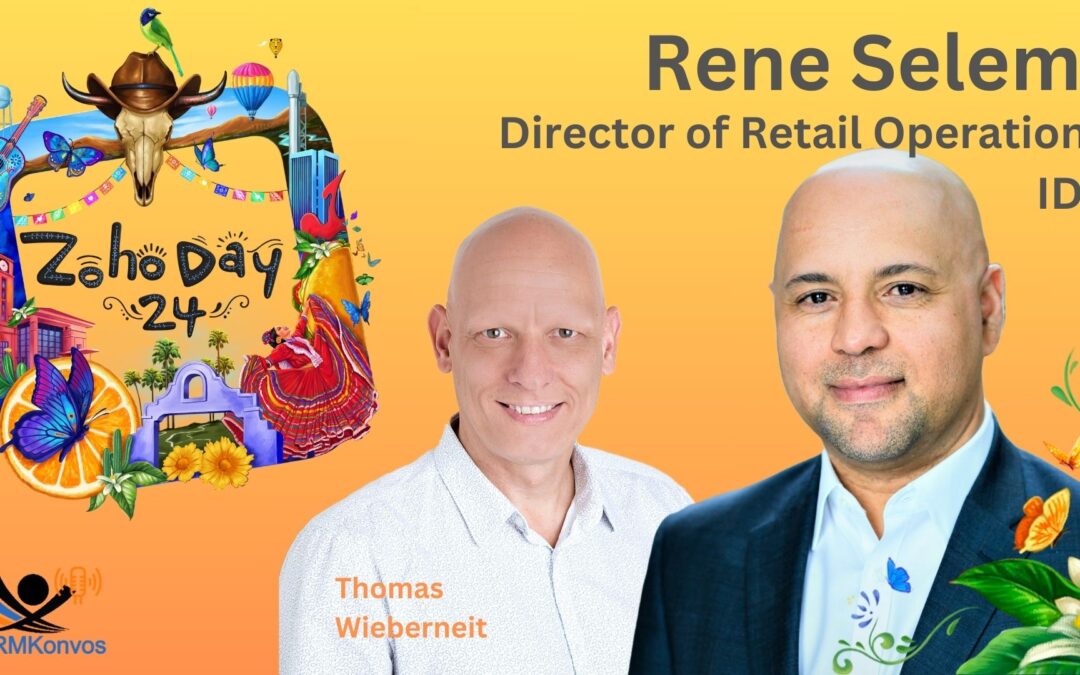
About two years ago, I had the pleasure of speaking with Elie Katz of National Retail Solutions, NRS, about how he and his team “zohotized” NRS. During this year’s ZohoDay24, I was happy enough to continue this conversation with Rene Selemi, director of retail operations at IDT Corporation, the parent corporation of NRS. IDT is a global provider of communications and payment services, headquartered in Newark, New Jersey. The company employs around 1,700 people. You prefer to watch the interview? You can do it right from here. IDT started to use Zoho around 7 years ago for its internal startup NRS. The scope was customer care with the objective of enabling the business to respond to quick and effectively to customers. IDT and NRS originally settled on Salesforce but after using it for about a year decided to move away in favor of Zoho as it was a better fit and faster to implement. Says Selemi “We had Salesforce for a while for about a year, but at the end we decided to go away from Salesforce and actually implemented Zoho. [..] It was a better fit [and] it was quick to implement. That was number one. We did it when minimum resources and we did it very fast.” This is very much in line with what Elie Katz told me two years ago: “the other implementation still did not yield results for his business in spite of mounting bills”. The two main criteria that IDT worked and works on, are functional fit and cost. What started as a point solution has become the backbone for NRS since then...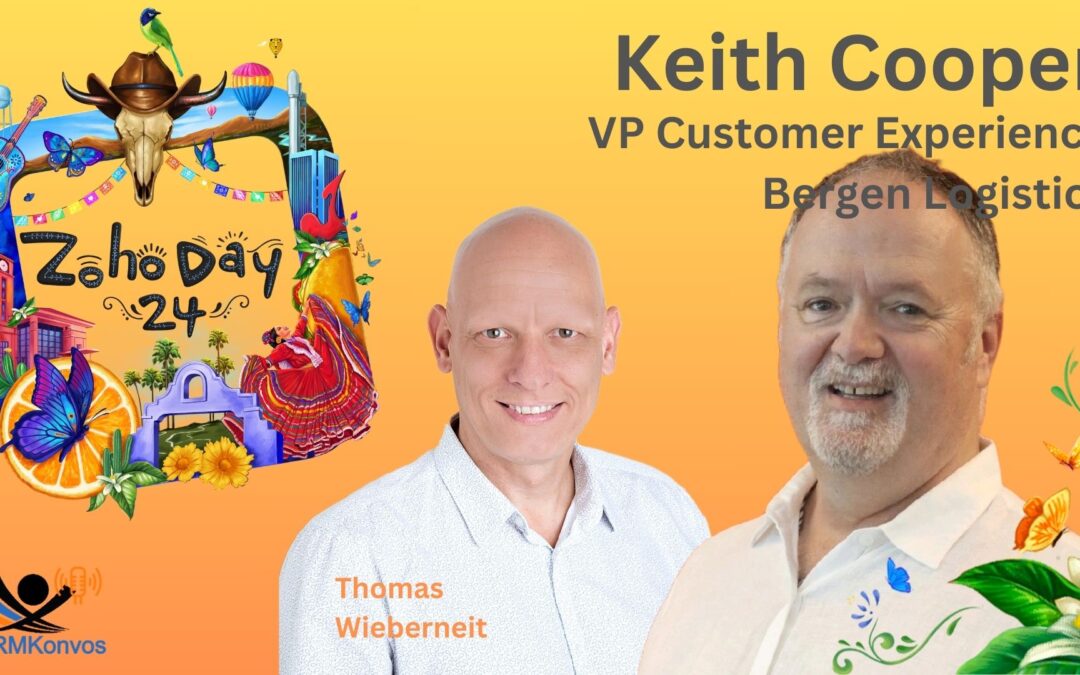
The power of a great customer – vendor relationship
As part of my series of customer interviews, I recently had the chance of speaking with Keith Cooper, vice president of customer experience at Bergen Logistics. Bergen Logistics is a global third party logistics provider, based in North Bergen, New Jersey. It primarily serves the luxury fashion and home goods segments but is available in other verticals, too. In Keith’s words “When you order something from a company’s website online, the order comes to us. We pull the order, we pack the order, we ship the order, and it arrives to you in most cases the next day.” If you prefer to watch the interview, you can do so here. Bergen Logistics started to search for a CRM solution with the original focus on the-lead-to-order process. The trigger was the owner of the company inquiring for the status of a lead that he had given to sales a while ago – because the prospect was inquiring. At that time, “there was a belief [in the sales organization] that it was okay to take three or four days to respond to a client when they wanted to talk to us because we’re very bespoke; the salespeople sort of have this view that they would wait.” Not only did this risk the company reputation but additionally, available data showed that 40 percent of the prospects didn’t want to wait that long. They were trying to resolve a business issue. This translated into loss of business. The company did research and narrowed down the competition to Salesforce and Zoho. They did an in-depth analysis and went for Zoho. “Between Zoho and Salesforce...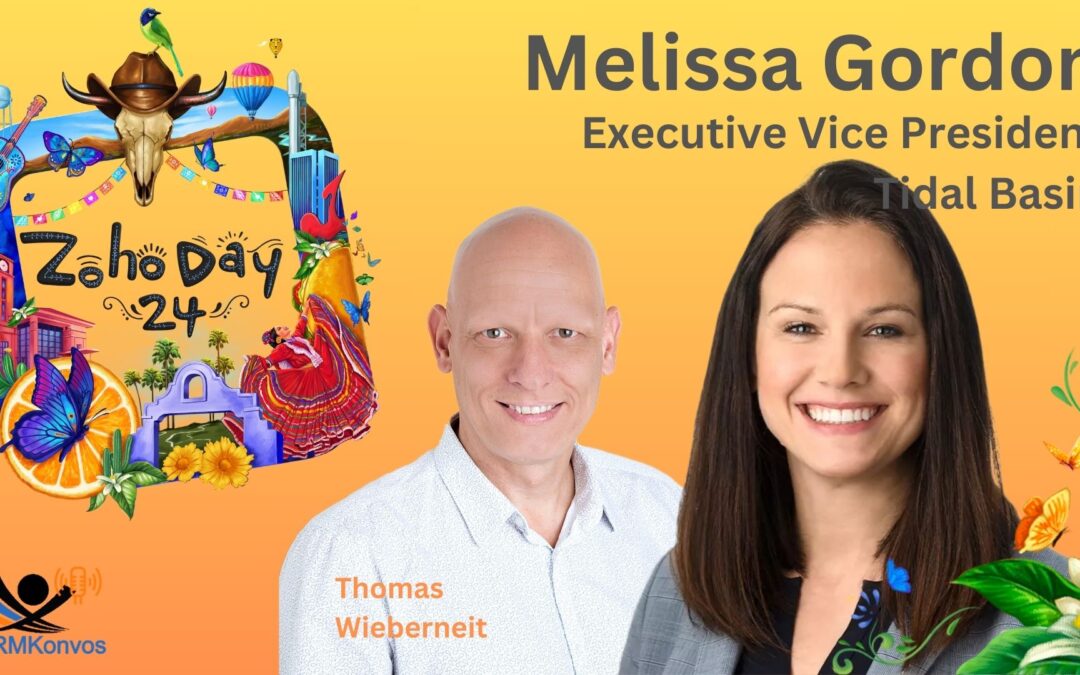
You are only as good as your customer remembers
As you know, I am very interested in how organizations are using business applications, which problems they do address, and how they review their success. In a next instance of these customer interviews, I had the opportunity to talk with Melissa Gordon, Executive Vice President, Enterprise Solutions at Tidal Basin about their journey with Zoho. You can watch the full interview on YouTube. Tidal Basin is a government contractor that provides various services throughout the government space, including disaster response, technology and financial services, and contact centers. Tidal Basin started with Zoho CRM and was searching for a project management tool in 2019. This was prompted by mainly two drivers. First, employees were asking for tools to help them running their projects. Second, with a focus on organizational growth and bigger projects that involved more people, Tidal Basin wanted to reduce its risk exposure and increase the efficiency of project delivery. This way, the company could actually create a triple-win situation, benefitting the employees, customers, and the company. also following the top management’s motto “if you take care of your people, and you take care of your customers, everything else will take care of itself.” The thought behind this is “that providing a mechanism for people to be more efficient, because everybody wants to come to work and do a good job. Nobody wants to do mundane tasks that don’t add value. And so, if you can provide a mechanism to do that, it enables our employees to then take better care of our customers.” Being tasked with implementing it, Melissa started off with a software selection process. This...