The Contact Center Is Dead: Long Live the Operations Layer
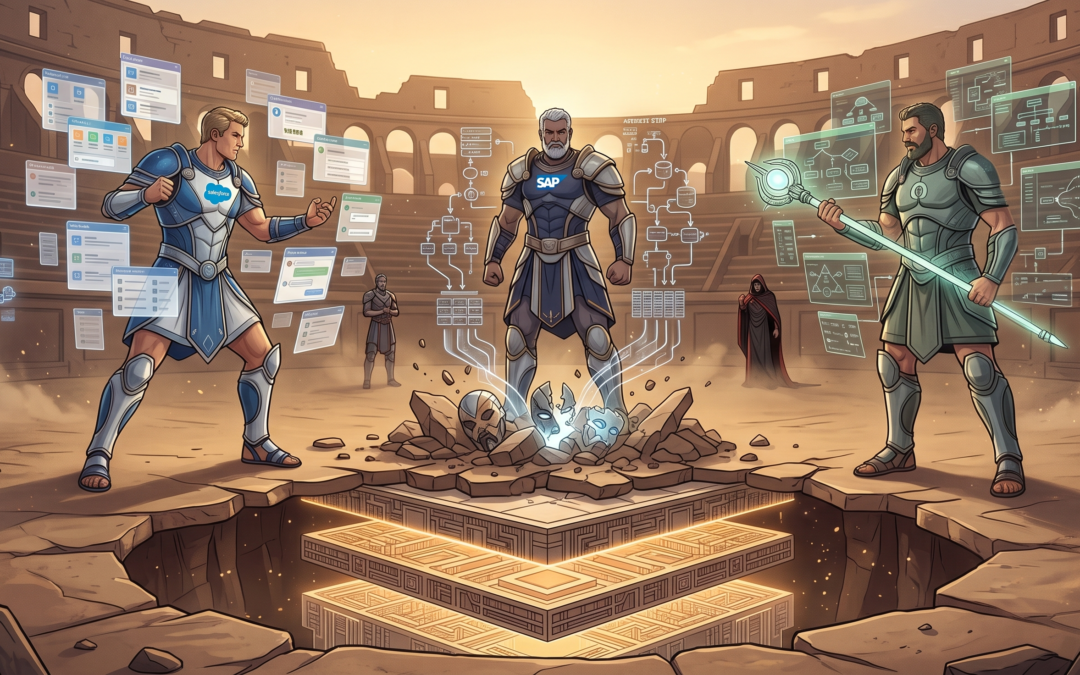
We have been lying to ourselves since, well, basically since forever. We placed customer support agents into a padded room called the “contact center,” handed them a ticketing system, and told them to keep the angry people away from the rest of the business. We tracked average handle times; we cheered when a routing algorithm saved a fraction of a second; and we pretended that managing an interaction was the same thing as solving a problem. Deflecting an issue was the holy grail. That era is over. The walls of the contact center have been blown wide open, and the debris is currently raining down on the CRM and operations landscapes. The market is shifting from asking the question “who can capture the ticket best?” to “who can actually resolve the problem fastest?” Which is an entirely different category of question. And far more meaningful. And as Cameron Marsh from Nucleus Research so accurately pointed out in our recent CRMKonvo, that is a much nastier, much more complex place to compete. TL;DR If you want to watch the full CRMKonvo, please go ahead here (optimized for smartphones) or here (optimized for tablets/computers). Else, be my guest and continue to read. Or feel free to do both … The Illusion of the “Smart Ticket” Let’s just be absolutely clear from the start: nobody wants a ticket. A ticket is simply a formalized receipt of failure. It is documented proof that a product broke, a service failed, or a user interface was too clunky to navigate. For years, many vendors, including specialists like Zendesk, Freshworks, and others have built success around...
The Uncomfortable Truth About Enterprise AI in 2026: It’s Not Intelligence, and That’s a Problem
As enterprises scramble to deploy AI, the Great AI Debate’s eighth installment reveals a widening gap between what vendors are selling and what actually works at scale. Dr. Michael Wu and Jon Reed spent this episode cutting through the hype around language models, domain expertise, and the financial reality of building sustainable AI systems; and they didn’t pull punches about where the field is failing. TL;DR If you want to watch the full CRMKonvo, please go ahead here (optimized for smartphones) or here (optimized for tablets/computers). Else, be my guest and continue to read. Or do both … The Domain Expertise Imperative: Correlation is Not Causation One of the most dangerous, and frankly lazy, narratives pushed by AI maximalists is the idea that artificial intelligence negates the need for deep domain expertise. This is a fundamental misunderstanding of how these models work. As Dr. Michael Wu frequently points out, almost all machine learning and AI systems today are built using supervised or reinforcement learning. They are, at their core, sophisticated correlation engines. They do not understand causality. They can surface 50 variables that move together, but they cannot tell you whether A causes B, B causes A, or if a hidden confounding variable C is responsible for both. If an LLM correctly states that smoking causes cancer, it is not because it understands the biological mechanisms of cellular mutation; it is because it has been fed enough human-generated text asserting that relationship. It creates the illusion of causal reasoning without the substance. This is precisely why domain experts, whether in healthcare, supply chain logistics, or financial services, are more vital...
Beyond the Honeymoon: Why Map Communications Bets on Zoho for a Decluttered Tech Stack
Recently, while on the ground in Austin, Texas, attending ZohoDay 2026, I had the pleasure of sitting down with Vaibhav Dani, the CEO of Map Communications. In the enterprise software ecosystem, we talk endlessly about digital transformation, but it is always refreshing to ground those lofty concepts in reality by speaking directly with the leaders navigating these complex implementations. Our conversation touched on a surprisingly common, yet notoriously difficult challenge: harmonizing a homegrown operational tech stack with off-the-shelf enterprise software. Map Communications’ journey with the Zoho ecosystem provides a masterclass in pragmatic architecture, the age-old “buy versus build” dilemma, and the foundational data hygiene required to actually make artificial intelligence work. TL;DR If you do not want to read this, here’s the full length video interview. Everybody else, please read on. The Business Context: Bespoke Service at Scale To understand their technology strategy, you first have to understand their business. Map Communications is a nationwide, employee-owned (ESOP) virtual receptionist and bespoke answering service operating across the US, Canada, and the UK. They serve a wide array of clients, ranging from legal firms and SMBs to large enterprises in various industries. Because their core service is highly specialized, Map relies on its own proprietary, homegrown software lineup to manage day-to-day operations and real-time answering services. However, when it comes to managing the customer lifecycle from the moment a prospect lands on their website to the execution of contracts and ongoing support, they rely on the Zoho suite. The Age-Old Dilemma: Buy vs. Build As businesses grow and their processes add complexity, leadership is inevitably faced with a choice: do we build custom modules...